Meet Apex: The New Stegosaurus Taking Over the American Museum of Natural History
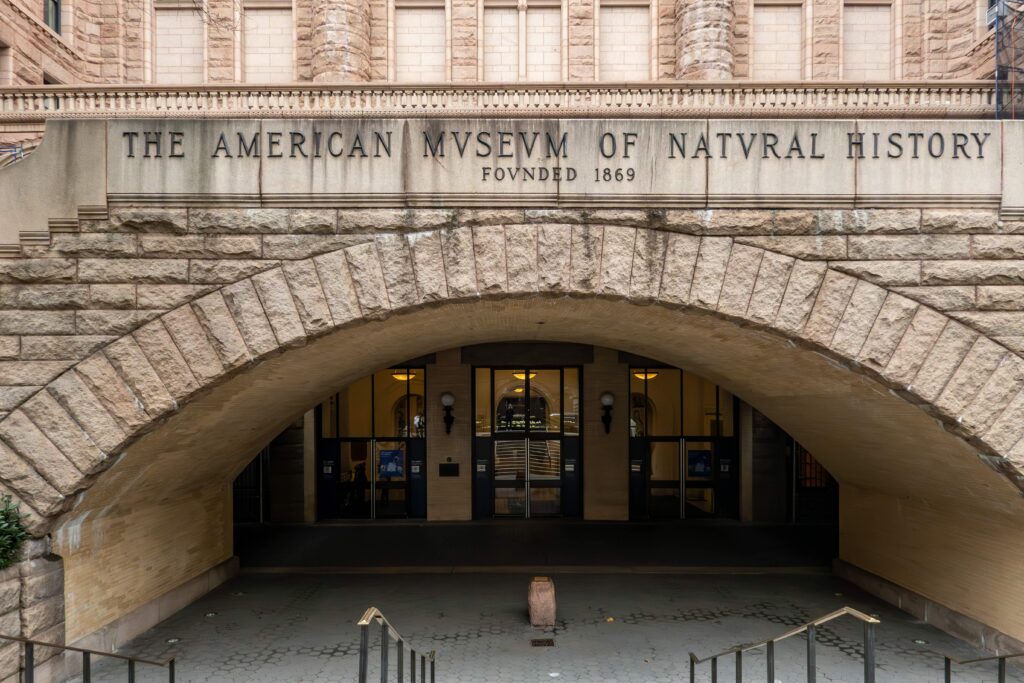
Looking for something exciting to do with the kids in New York City this summer? There’s a new prehistoric star at the American Museum of Natural History, and it is hard to miss.
Meet Apex, a towering Stegosaurus fossil that is now on display in the Museum’s Gilder Center. Thought to be the largest and one of the most complete Stegosaurus fossils ever discovered, Apex is an incredible new reason to bring the kids back to the Natural History Museum.
A Dinosaur That Really Makes an Entrance
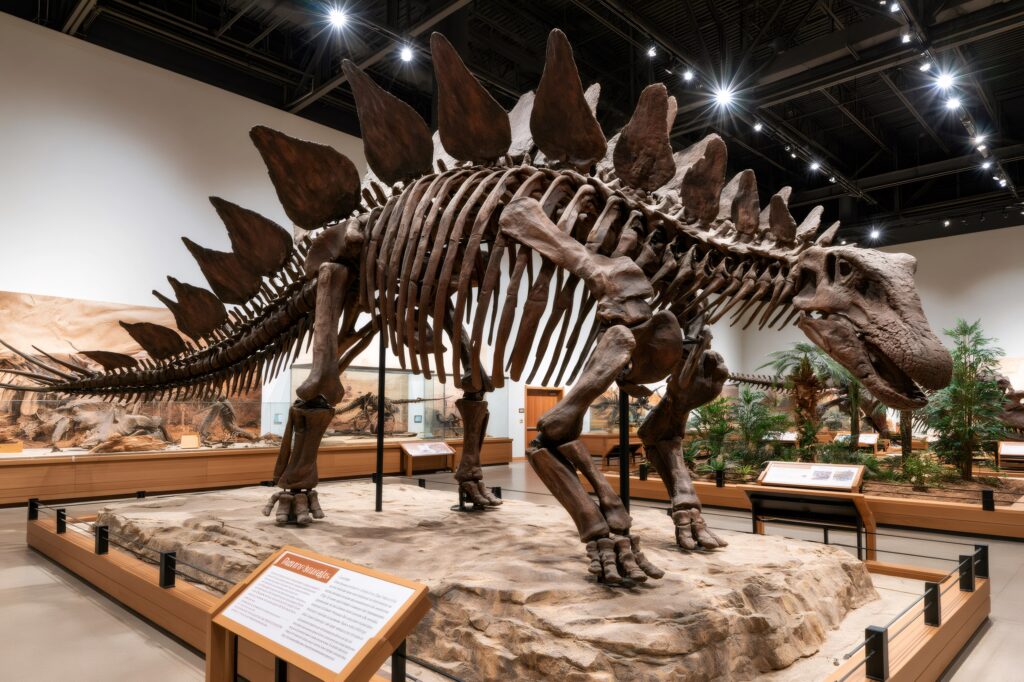
Standing prominently on the fourth floor, the fossil greets visitors as they enter the Museum’s famous fossil halls from the Gilder Center. And when children walk up and see the enormous skeleton, the reaction is almost guaranteed to be: “Wow!”
Apex lived approximately 150 million years ago, during the Late Jurassic Period. The skeleton is remarkably well preserved, giving visitors an extraordinary look at what this famous armored dinosaur actually looked like.
One of the Most Complete Stegosaurs Ever Found
What makes Apex so special is just how much of the original skeleton remains.
The fossil contains more than 254 of approximately 320 bone elements, making it an exceptionally complete specimen. The fossil was discovered in 2022 just outside the town of Dinosaur, Colorado.
Where pieces were missing, the Museum filled them in with 3D-printed and sculpted components, allowing visitors to see the dinosaur as a nearly complete animal.
For kids, this turns a dinosaur lesson into something tangible: they’re not simply looking at a reconstruction—they’re seeing an extraordinary fossil that scientists can actually study.
You Can Actually Touch a Stegosaurus Plate
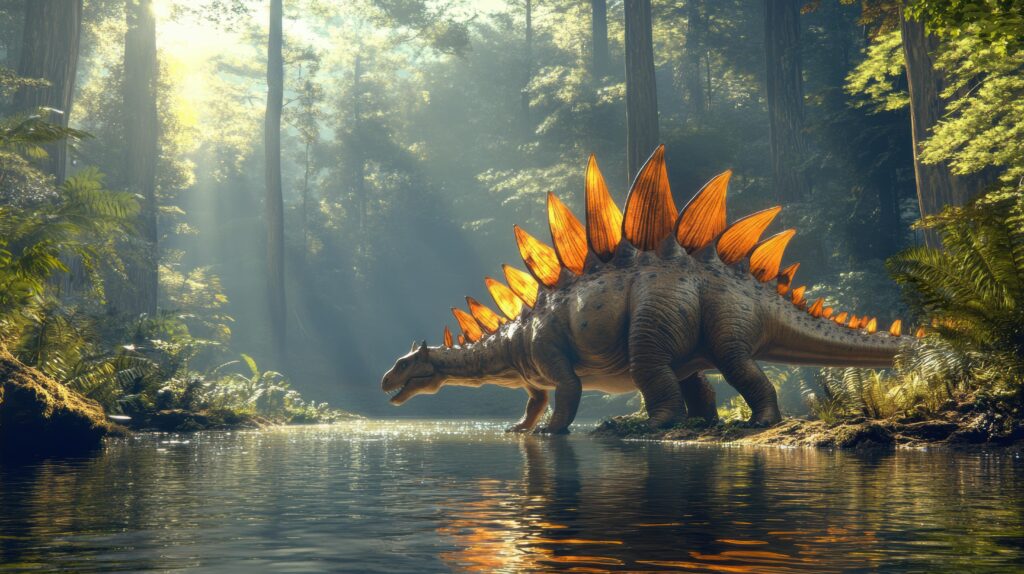
One of the best parts of the new display for children is an interactive touchable cast of a Stegosaurus back plate.
Kids can feel the rough texture and learn that the actual bone underneath the plate was covered with keratin—the same material found in human fingernails and reptile scales.
There are also interactive media stations where visitors can explore Apex in greater detail.
It’s exactly the kind of museum experience that makes kids stop, look, ask questions—and remember what they’ve learned.
Apex Is Still Helping Scientists Learn
Perhaps the most fascinating part is that Apex isn’t simply an object from the past. It is also helping scientists answer questions about how Stegosaurs lived.
Researchers at the Museum are studying a sample from one of Apex’s fossilized thigh bones. By examining its microscopic structure, scientists hope to learn more about how this enormous dinosaur grew and potentially identify evidence of growth patterns.
That means children aren’t just learning about dinosaurs—they’re getting a glimpse into how modern paleontology works.
Posted in manhattan living |